
Community Based Participatory Research to Advocate for Deeply Affordable Housing in South Etobicoke
About the Project
The Affordable Housing Needs in South Etobicoke research project is a partnership between LAMP Community Health Centre and Humber College funded through NSERC. We aim to uncover the cost-of-living issues through community based participatory research (CBPR) in South Etobicoke.
The South Etobicoke Housing Affordability study (SEHA) is led by principal investigator, Salomeh Ahmadi, Humber College, in partnership with LAMP Community Health Centre, funded through The Natural Sciences and Engineering Research Council of Canada (NSERC).
Our aim is to uncover cost-of-living issues through community based participatory research (CBPR) using a community of practice (CoP) to ensure sustainable advocacy in the community and beyond this study, further discussed in this report.
Through primary and secondary data research, we’ve captured localized data about housing affordability in South Etobicoke for renters and those without a permanent address.
A brief timeline of the project
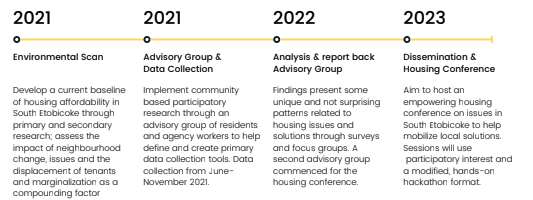
APPROACH
Using a mixed-methods approach, self-reports by residents who face affordability barriers, marginalization, evictions, or are low-income. An environmental scan presented the absence of local data on housing in South Etobicoke. This study prepared the cost-of-living issues through Community Based Participatory Research (CBPR), as co-researchers. The study utilized surveys (N=277), 17 interviews (general, evictions) and two focus groups (8 for co-operatives and 12 for non-profit agencies), involved people living or working in South Etobicoke
The findings suggest many locals are feeling the exacerbated effects of housing precarity.
74% living in core housing need; and 54% living in severe housing need
The top three issues were: repairs needed, unaffordable rents and housing instability. They voiced worry about social marginalization, lack of political will, and corporate greed with the unaffordable rent prices.
Why the Rental Market
- Unique inequities faced by marginalized people
- Almost half of all renters face core and severe housing needs
- To develop an accurate baseline of affordability for those most negatively impacted
- To address the negative impacts on renters have persisted unchanged
- The financialization of rental market continues to worsen
In September 2022, the Federal Housing Advocate @HousingLogement asked the National Housing Strategy Council to establish a Review Panel to examine the financialization of purpose-built rental #housing. The Council is ready to move forward, and hopefully will address this long-standing issue immediately.
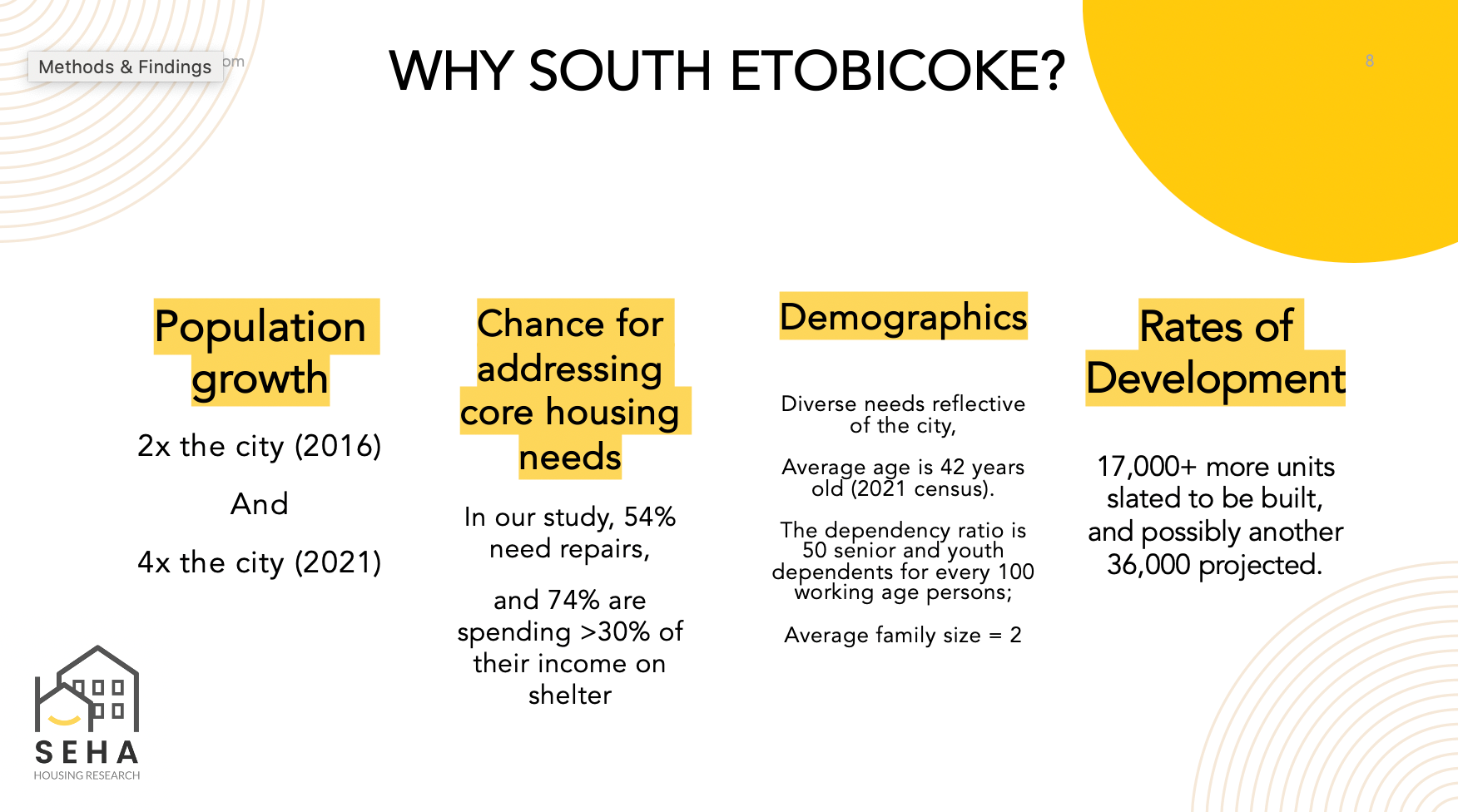
The financialization of housing “occurs when housing is treated as a commodity – a vehicle for wealth and investment, rather than a social good” (OHRC, 2008).
Successes to Date
We know community work is tireless and isn’t possible with the frontline workers, advocates, activists and disrupters of the status quo. Some of our collective successes to date that will help continue the work,
- our partner has received two funding grants to continue the work
- local community groups have used out research for capacity building
- founded the created of a local community benefits agreement group, partnered with Toronto Community Benefits Network (TCBN)
- helped with advocacy, education and mobilization of housing affordability issues
- Students’ advocacy through College Student Alliance
- hosted National Housing Day events and panels
- Will be hosting capacity building workshops
- Will be hosting a housing conference March 3-5, 2023
- Research Resource Toolkit https://bit.ly/3J6qDOT
For information, and upcoming events, please check out https://linktr.ee/southetobicokeha
Principal Investigator
Research Assistant Natalie Pilla